
What Mastering Does to a Song and Why Cars Expose Every Lie
Mastering shapes the final sound of every track you hear, but a master built for earbuds can fall apart completely in a car. Here is what mastering actually changes and why your system tells the truth.
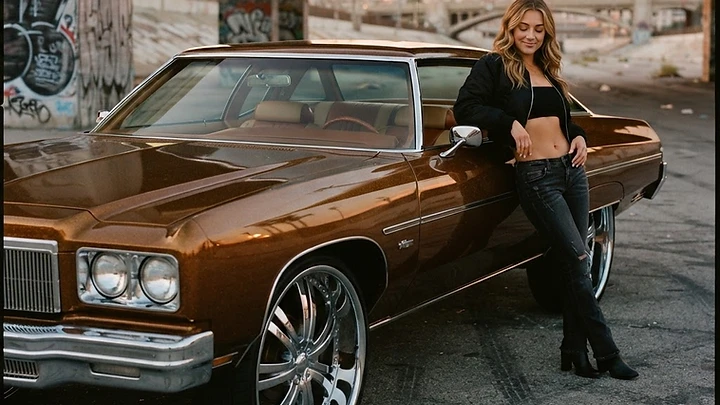
The first time I sat in a car with a real system, I was sixteen years old in the back seat of somebody's Cutlass. The guy up front played one song, and I felt it in my chest before I heard it with my ears. I did not know anything about crossovers or box tuning or headroom. I just knew that whatever that was, nothing I had ever heard through earbuds came close. That feeling is why we build systems. And that feeling is also why mastering matters more than most people realize.
Mastering is the final step in music production, the process where a mastering engineer takes a finished mix and shapes its overall loudness, tone, stereo width, and dynamic range so it translates well across playback systems. A great master sounds good on a phone, on a club system, on a TV, and in a car. A bad one, or one optimized for the wrong listener, can sound flat and gutless, or brittle and harsh, the moment the context changes.
Your car is the harshest possible test. It does not lie.
Key Takeaways
- Mastering sets loudness, tone, and dynamic range for a final release, and every decision the engineer makes is a trade-off that favors some playback environments over others.
- Earbuds and car systems are acoustic opposites. What sounds balanced on earbuds can sound thin and harsh through a subwoofer and door speakers in a real vehicle.
- Cabin gain adds 6 to 12 dB of low-frequency energy below 80 Hz naturally, so a master with heavy low-end boost will become overwhelming or muddy once your room is a car interior.
- Dynamic range compression applied during mastering reduces the peaks and valleys in a track, which sounds great at low volume on earbuds but kills the punch and impact that make a subwoofer demo actually hit.
Editor's Pick
Recommended JL Audio TwK-88 DSP processor
What Mastering Actually Changes in a Song
Most people think mastering just makes a song louder. That is the least interesting thing it does.
A mastering engineer works with a limiter, a multi-band or wideband compressor, an equalizer, stereo-width tools, and sometimes harmonic saturation. Each tool reshapes the audio in ways that affect how it behaves on different speakers.
Limiting and loudness is the part everyone knows. The Loudness Wars of the 2000s pushed integrated loudness levels to minus 6 or minus 7 LUFS, which is extremely hot. Modern streaming targets are around minus 14 LUFS for Apple Music and Spotify. That shift actually helped car audio listeners, because louder masters leave less dynamic headroom and compress transients, which is bad for big subwoofer hits.
EQ decisions are where a master gets built for a specific context. A mastering engineer mixing down for earbuds might roll off below 60 Hz because earbud drivers physically cannot reproduce it, and leaving deep sub-bass in just wastes headroom. That same decision, applied to a track you play through a 15-inch subwoofer in a ported box tuned to 32 Hz, means you get almost nothing below 60 Hz. The box is doing its job. The master is not.
Stereo width adjustments affect imaging in ways earbuds exaggerate and car speakers flatten. Wide stereo sounds enormous on headphones because each ear gets a fully isolated signal. In a car, crosstalk between left and right channels, the acoustic space, and speaker placement can collapse that width into something that sounds thin and strange. Some bass elements are intentionally kept mono in mastering to stay centered and punchy. If a mastering engineer over-widens the low end thinking it sounds bigger on earbuds, that decision can smear bass in a car and make a subwoofer sound unfocused.
Compression and transient shaping are the most misunderstood. Compression reduces the gap between the loudest and quietest parts of a song. On earbuds at moderate volume, compression helps everything stay audible and present. In a car system tuned for impact, that same compression removes the attack from kicks and 808s. The sub fires, but the hit does not have the snap you want. It sounds loud but not hard. There is a difference.
Why Earbuds Make Engineers Lie (Without Meaning To)
This is not a knock on mastering engineers. The best in the industry know what they are doing. But every mix is finished in a room on reference monitors, checked on multiple systems, and then called done. The problem is that earbuds have become the dominant consumer playback device, and they shape what engineers optimize for.
In-ear monitors and consumer earbuds have a specific frequency response that many users describe as V-shaped: boosted low end and boosted highs, with a slightly scooped midrange. Beats, AirPods, Sony WF series earbuds, all of them. Engineers hear this and compensate. They tighten and reduce the low-mids. They boost the upper presence range around 3 to 5 kHz to cut through. They may limit the sub-bass to keep it from bloating on a small driver.
All of that is reasonable for earbuds. In a car, it is a problem.
Reduced low-mids means the warmth and body of a mix, the stuff that fills out a car interior, is thinner than it should be. Boosted upper presence on a car tweeter, especially a cheap factory unit, becomes fatiguing and harsh within twenty minutes. Limited sub-bass means a subwoofer doing its best is still working with a signal that was kneecapped before it got to the amplifier.
The car has no way to recover what was removed in mastering. An equalizer in a DSP processor can boost a frequency range, but it cannot add information that was never encoded in the track. Boosting at 40 Hz when nothing was recorded there just adds noise and distortion.
Editor's Pick
Recommended Helix DSP PRO car audio
How Cabin Gain Changes Everything Below 80 Hz
Cabin gain is the natural low-frequency amplification that happens inside any enclosed space, including your vehicle interior. The physical dimensions of the cabin act like a resonant cavity. Sound waves at low frequencies, especially below 80 Hz, build up through boundary reinforcement from the floor, seats, and walls. Measured cabin gain is typically 6 to 12 dB between 20 and 80 Hz, depending on vehicle size and interior materials.
This means any sub-bass that makes it through the master, through the amplifier, and through the subwoofer, is already getting a significant natural boost inside your car. A track mastered with a lot of energy between 40 and 60 Hz, which might sound balanced in a control room, can become overwhelming in a car interior. Sub-bass that the engineer thought was moderate becomes suffocating. Or worse, it sounds like pure boom with no definition, because the cabin is reinforcing a range that was already heavy.
Conversely, a track with very little sub-bass below 50 Hz, intentionally limited for earbud playback, will sound thin even with cabin gain on your side. The gain helps what is there. It does not create what is missing.
This is why the same song can sound completely different in a Honda Civic versus a full-size SUV, even on the same system. The cabin dimensions change the gain profile. A small hatchback with hard surfaces may measure plus 10 dB below 60 Hz. A larger sedan with thick seating and carpet might only add 6 dB. Your box tune, your amplifier gain, your DSP crossover points, all of them have to account for what the room is doing on top of what the master already built in.
The Dynamic Range Problem and What It Means for Your Sub
The Loudness Wars gave us years of heavily compressed, dynamically flat masters. Streaming normalization has walked some of that back, but plenty of music, especially in commercial hip-hop and pop, is still mastered with very little dynamic range. Integrated loudness around minus 8 or minus 9 LUFS is still common on tracks aimed at streaming playlists.
For earbuds, a compressed master is actually comfortable. Everything stays in a tight loudness range. You never reach for the volume knob. Nothing punches you in the ear unexpectedly. It is a smooth listening experience.
For a subwoofer, it is a slow-motion disaster.
The hit of a kick drum or 808 in a well-produced track comes from transient impact, the sudden, fast rise from silence to peak energy. That spike is what your subwoofer needs to move hard and fast, which is where the physical sensation in your chest comes from. Heavy limiting in a master clips those transient peaks or rounds them off entirely. What reaches the subwoofer is a blunted, softened version of what the producer intended. The cone still moves. But it does not snap. And snap is the whole point.
A master with a dynamic range of 6 dB or less (DR6 or lower on the Dynamic Range database scale) will almost always feel sluggish on a competition-grade system, regardless of how well-tuned the box is or how powerful the amplifier is. You can measure this with a free DR meter on any WAV file before you even load it into a car.
What a Good Master for Car Audio Actually Looks Like
A track that performs well in a car system typically shares a few characteristics that have nothing to do with genre.
Dynamic range between DR8 and DR12 gives subwoofers something to react to. There is enough contrast between loud and quiet moments that transients hit with actual impact. Tracks by producers like Metro Boomin, Timbaland during his peak years, and DJ Mustard regularly sit in this range.
Sub-bass energy that extends to 30 or 35 Hz without being overloaded. The 808 hits on a well-mastered trap record should show real spectral energy at 40 Hz and meaningful energy down to 30 Hz. A spectrogram in any DAW will show this visually. Tracks that drop off steeply below 60 Hz will underperform on ported boxes tuned below that threshold.
A controlled but present low-mid range, around 100 to 200 Hz, gives the mix body and warmth in a car interior. This is the frequency range that separates a system that just sounds loud from one that sounds full and musical.
No aggressive high-frequency harshness above 8 kHz. In a car with component tweeters or even decent coaxials, a bright master will cause fatigue on long drives and can expose poor imaging that would be hidden on earbuds.
If you are an indie artist or producer finishing your own music and want to hear exactly how it behaves on a real car system before you distribute it, AAMPED Labs was built specifically for that. It masters songs for car playback and can rebuild bass to match your actual box tune, so you hear the track the way your system will hear it, not the way a mastering engineer assumed it would be played.
How to Hear the Difference in Your Own Car
This is not a theoretical exercise. You can do this in an afternoon.
- Find the same song in two versions: the standard stream and a high-resolution download (FLAC or 24-bit WAV) if one exists. The high-res file is usually less processed.
- Play both back-to-back at matched loudness levels. Use your phone's volume to level-match, not the head unit, so the DSP gain staging stays consistent.
- Listen specifically to kick drum attack, 808 sustain and decay, and the way vocals sit in the mid range. Note what feels different.
- Then check the bass response below 60 Hz with a tone generator app and see whether your system responds to tones below 50 Hz. If it barely moves, the master may have rolled off that range.
A good DSP unit like the JL Audio TwK-88 or the Helix DSP PRO can show you incoming signal levels across frequency bands in real time. If you see the low shelf collapsed before the signal even hits your amplifier, the problem is upstream. It is in the master.
FAQ: Mastering and Car Audio
Does streaming quality affect how mastering sounds in a car?
Yes. Lossy compression at 128 or even 256 kbps Ogg Vorbis (Spotify's default) removes high-frequency information and can introduce artifacts that are hard to hear on earbuds but noticeable on a detailed car system. Always use the highest quality stream available.
Can I fix a bad master with DSP or EQ in my car?
Partially. You can boost frequencies that are present but underrepresented. You cannot recover information that was never encoded. A severely limited, dynamically flat master will still sound blunted on a subwoofer regardless of how much you boost the low end.
What LUFS target is best for car audio playback?
Tracks mastered between minus 10 and minus 14 LUFS tend to perform best in car systems. That range preserves enough dynamic headroom for transients to hit hard without requiring the listener to push the volume dangerously high.
Why does a song sound great on my phone but thin in the car?
The phone and earbuds system has no real sub-bass, so the mix sounds balanced. The car reveals what is actually missing in the low end and exposes any harshness in the high-mid range that earbuds smooth over with their V-shaped response curve.
Your Car Is the Truth Teller
Every mastering decision made in a studio gets stress-tested the second that track plays in a real vehicle at real volume. The compression that made a song feel smooth on a playlist becomes the same compression that stops your subwoofer from snapping the way it should. The high-frequency air that sounded open on AirPods becomes fatigue through a set of Morel Elate tweeters at highway speed.
This is not a flaw in your system. It is your system doing exactly what it was built to do: tell the truth.
The best you can do is understand what mastering decisions were made on a given track, choose music that was mixed with dynamics and real sub-bass energy, and tune your DSP to work with what you have rather than fight it. Know your box tune. Know your cabin gain curve. And know that when a track hits different in your car than it did in your earbuds, the car is not wrong.
The question is: what tracks in your current rotation have you gone back and tested this way? Pull up a spectrogram, check the dynamic range, and let me know what you found. Because I guarantee some of your favorite songs are hiding things you have never heard before.
From AAMPLIFIED
View all gear →


Gear Mentioned in This Article
As an Amazon Associate we earn from qualifying purchasesRecommended JL Audio TwK-88 DSP processor
Recommended Helix DSP PRO car audio
Recommended dynamic range meter plugin WAV
Recommended FLAC audio player car head unit
Recommended subwoofer ported box 12 inch 2 ohm
AAMPLIFIED is an Amazon Associate. When you buy through links on our site, we may earn a commission at no extra cost to you. Recommendations are independent and based on the gear discussed in this article.
Related topics:
Rep the culture. Browse AAMPLIFIED apparel and gear for car audio enthusiasts.
aamplified.store →Reactions
Comments (2)
The mention of how compression kills the transient attack really hits home for those of us running large displacement drivers. When an engineer squashes the dynamics for phone speakers, it leaves almost no headroom for the mechanical excursion required for a clean, hard-hitting kick. I find that even with a precise enclosure tune, you just cannot get that visceral physical snap if the master is already limited to death at the production stage.
You hit the nail on the head about cabin gain, but saying it is always 6 to 12 dB is a bit of a reach depending on the ride. My Alpine 12s sound completely different in my hatchback compared to when I had them in my sedan, and the gain profile changes way more than that in tight spaces. Instead of relying on a fixed number, I suggest running a RTA app in your own car to see where the natural peaks are sitting. Once you spot the real gain in your specific space, pulling a couple notches out of the EQ around 50 Hz helps keep the subs from sounding muddy without killing that deep impact.
Ready to Master Your Tracks?
Upload your music and get professional bass enhancement tuned for car audio.
Get Started Free